You’ve built the website.
Maybe it’s Shopify. Maybe WooCommerce.
Now you’re running ads, posting on social, working on SEO, or doing a mix of all three to get shoppers there.
The Philippines has more than 97 million internet users, and the ecommerce market was already worth around $28 billion in 2024.
But getting traffic is only half the job.
Some shoppers buy. Others browse and leave, while a few make it all the way to checkout and disappear.
Even customers who buy once don’t automatically come back.
So what happens after you’ve earned their attention?
Why Ecommerce Traffic Doesn’t Always Turn Into Sales
Filipino shoppers have options.
They can discover products on TikTok, Instagram, Facebook, or Google. They can compare products on Shopee or Lazada. Or they can buy directly from a brand’s website.
And they don’t always buy the first time they find you.
A shopper might see your product on TikTok, check your Instagram, visit your store, leave, then come back a few days later.
Maybe they’re comparing. Or they need more information. In some cases, they may simply be waiting for payday.
The first visit still matters.
Because once someone has shown interest, you don’t want the relationship to end the moment they close the tab.
What Happens When You Keep Paying for the Next Visit?
Every website visit costs something.
Maybe you paid Meta or Google for the click. Maybe you spent months building SEO traffic. Maybe your team keeps creating content to stay visible.
Then the shopper leaves.
Without a follow-up system, bringing them back often means relying on acquisition again.
And the same thing can happen after the first sale.
You acquired the customer. They bought once. Then the relationship goes quiet.
Shopify reports that loyal customers can make up just 21% of a customer base while generating 44% of revenue and 46% of orders.
Your numbers won’t necessarily look the same.
But the point is simple:
The first purchase shouldn’t be where the relationship ends.
How Email Helps You Get More From Existing Traffic
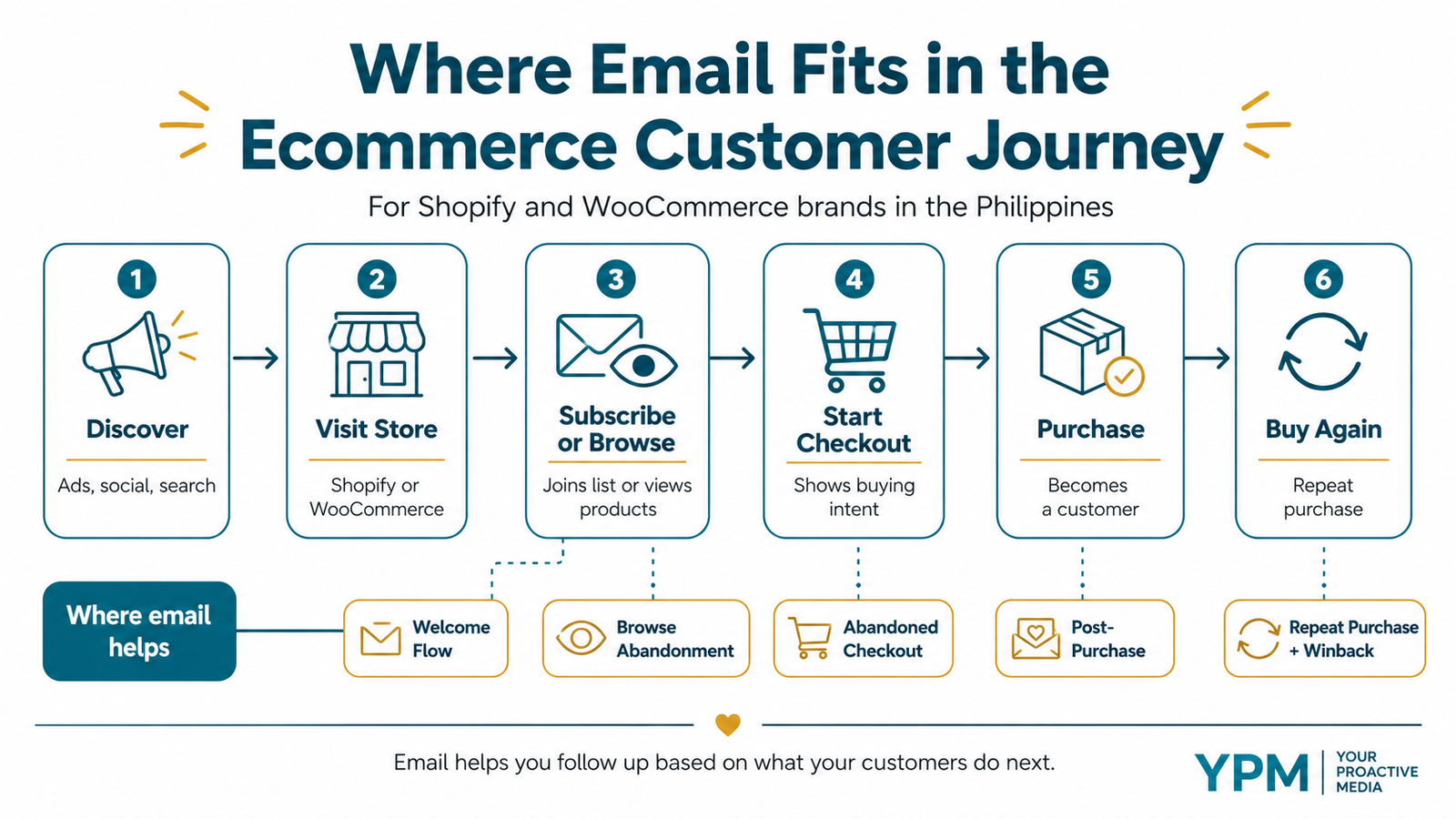
Email lets you follow up with subscribers and customers based on what they actually do.
A new subscriber needs something different from someone who started checkout yesterday.
A first-time buyer needs something different from a customer who hasn’t purchased in six months.
That’s why email works best as a system.
Traffic → Sign-up Forms → Subscribers → Flows → Campaigns → Customers → Repeat Customers
How You Grow Your Email List
Before flows can work, you need subscribers.
That’s where sign-up forms come in.
A good form gives website visitors a clear reason to join your email list, whether that’s early access, a useful offer, product updates, or something genuinely valuable.
You might use:
- A welcome popup
- An embedded form
- Exit-intent
- Early-access forms
- Product-launch forms
The goal isn’t just to collect more emails.
It’s to turn the right website visitors into subscribers you can keep marketing to.
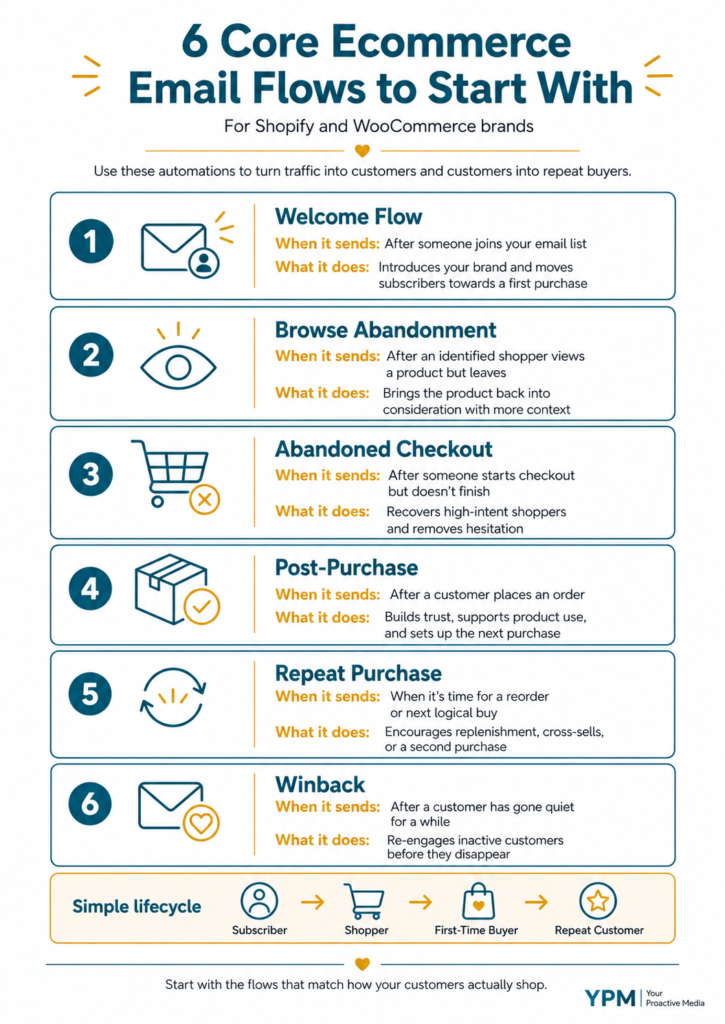
Which Email Automations Should You Start With?
You don’t need 20 flows.
Start with the moments that matter most.
| Flow | When it sends | What it helps with |
|---|---|---|
| Welcome | After someone joins your email list | First purchase |
| Browse Abandonment | After a shopper views a product but leaves | Reconsideration |
| Abandoned Checkout | After checkout starts but isn’t completed | Recovering high-intent shoppers |
| Post-Purchase | After someone buys | Education and next purchase |
| Repeat Purchase | When another purchase makes sense | Replenishment or cross-sell |
| Winback | After a customer goes quiet | Re-engagement |
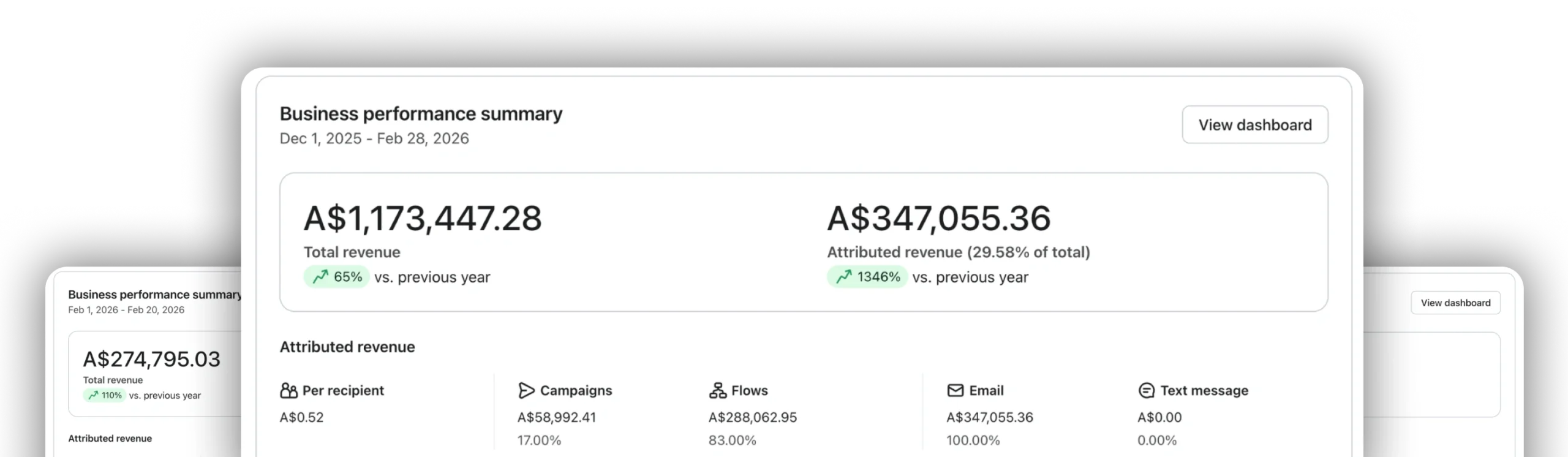
Klaviyo’s 2026 benchmarks found that automated flows generated nearly 41% of email revenue from just 5.3% of sends.
That’s why flows matter.
They react to customer behaviour instead of waiting for the next campaign.
Where Email Campaigns Fit
Flows react to behaviour.
Campaigns give you a reason to reach out.
You can use them for:
- Product launches
- New arrivals
- Promotions
- Product education
- Customer stories
- Seasonal campaigns
- Payday periods
- Replenishment
- Cross-sells
The key is not to turn every campaign into another sale email.
Some emails sell.
Others educate, build trust, or keep the brand relevant between purchases.
When Does Email Marketing Make Sense for Your Brand?
Email becomes more useful when:
- You have your own Shopify or WooCommerce store
- You’re getting regular website traffic
- You’re growing an email list
- You already have customers
- Your products can be bought again or paired with something else
- You’re investing in ads, SEO, social, or other acquisition channels
If nearly all your sales happen through marketplaces and you don’t yet collect subscriber or customer data through your own store, email may not be the first thing to fix.
But if the website, traffic, email list, and customers are already there, you’ve got something worth working with.
Build a Retention System, Not Just an Email List
A bigger email list is useful, but size alone won’t build retention.
Instead, a stronger setup connects sign-up forms, flows, campaigns, segmentation, and testing around what subscribers and customers do next.
That’s the real opportunity.
Not sending more email for the sake of it, but getting more from the traffic, subscribers, and customers you’ve already worked to acquire.
At Your Proactive Media, we help ecommerce brands build and manage retention systems across sign-up forms, lifecycle flows, campaigns, segmentation, testing, and ongoing optimisation.
If you already have a Shopify or WooCommerce store and you’re not sure where the biggest gaps are, we can review your setup and show you what’s worth fixing first.
Book a Free Email Marketing Audit
Or explore our Klaviyo email marketing services.